
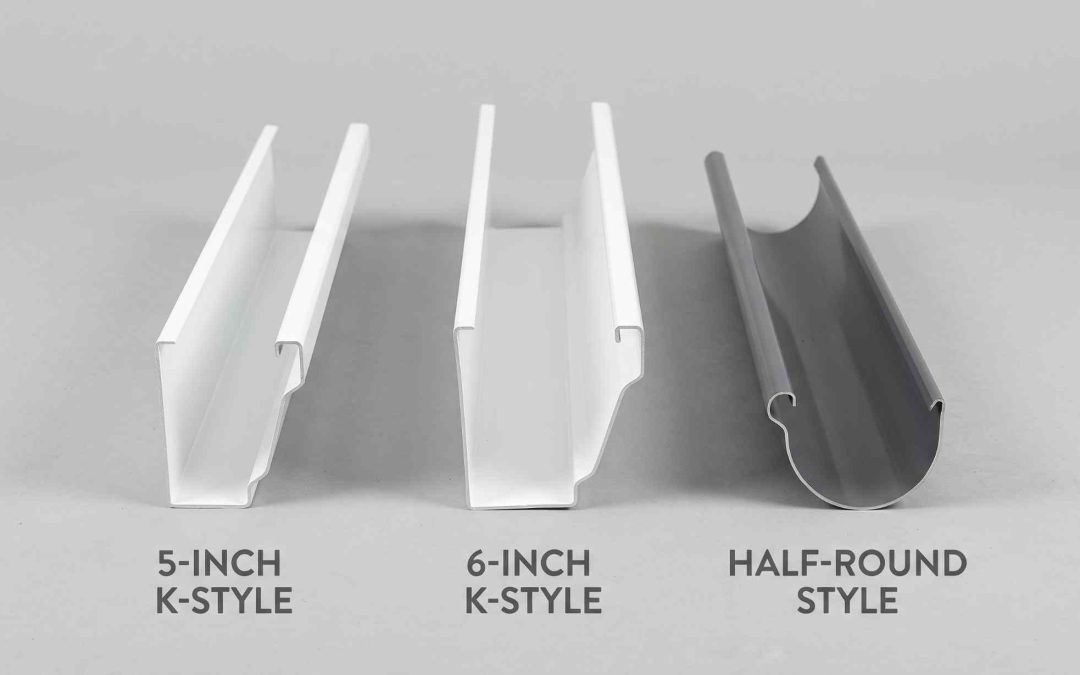
When planning a home improvement project, most homeowners focus on paint swatches, roof shingles, or siding materials. Rain gutters are often an afterthought, until a heavy summer storm hits, water overflows the troughs, and your basement starts showing signs of moisture.
Choosing the right gutter system isn’t just about selecting a color that matches your trim; it comes down to sheer volume and capacity. The most fundamental decision you will make when installing new seamless aluminum gutters is selecting the right trough size: 5-inch or 6-inch.
At Agassiz Valley Gutter, we see homeowners struggle with this choice every day across Northwest Minnesota and Eastern North Dakota. Installing the wrong size can lead to overflowing water, ruined landscaping, and expensive foundation repairs. This educational guide breaks down how 5-inch and 6-inch seamless aluminum gutters compare, how your roof’s architecture influences water flow, and how the Upper Midwest climate dictates which system your home actually needs.
Understanding the Differences: 5-Inch vs. 6-Inch Gutters
At first glance, a single inch might not sound like a significant difference. However, in the world of fluid dynamics and exterior water management, that extra inch completely changes how much water your roofline can handle.
Water Volume & Carrying Capacity
The cross-sectional area of a 6-inch gutter is significantly larger than that of a standard 5-inch gutter.
- 5-Inch K-Style Gutters: Hold approximately 2.2 gallons of water per linear foot.
- 6-Inch K-Style Gutters: Hold approximately 4.0 gallons of water per linear foot.
That single inch increase delivers roughly 80% more water volume capacity. During a torrential Midwest downpour, that extra capacity determines whether water drains safely through your downspouts or cascades over the edge of your roof onto your foundation.
Downspout Sizing
A gutter system is only as effective as its discharge points. The size of the gutter dictates the size of the downspouts you can use:
- Standard 5-inch systems typically utilize 2-inch3-inch rectangular downspouts.
- Standard 6-inch systems utilize larger 3-inch4-inch downspouts.
The larger 34 downspouts double the discharge capacity of the system. More importantly, they are far less likely to clog from twigs, maple seeds, and autumn leaves.
Key Factors That Dictate Which Gutter Size You Need
We don’t guess which gutter size a home needs—we calculate it based on three primary architectural and environmental variables.
Roof Pitch and Surface Area
The steeper your roof, the faster water flows into your gutters. Gravity accelerates runoff on high-pitched roofs, giving the water incredible momentum by the time it reaches the edge.
- Low to Moderate Pitch (4/12 to 6/12): Water moves at a manageable speed. A 5-inch gutter is often sufficient for small-to-medium roof sections with low pitches.
- Steep Pitch (7/12 or higher): Water rushes down rapidly. A 5-inch gutter can easily be “overshot” by fast-moving water, whereas a 6-inch gutter provides a wider opening (trough) to catch high-velocity streams.
Furthermore, total square footage matters. A large, uninterrupted roof plane collects massive amounts of rainfall and channels it all into a single gutter run. Large roof sections require 6-inch systems to prevent immediate capacity overload.
Roofing Material (Asphalt Shingles vs. Metal Roofing)
The surface material of your roof directly impacts how fast water sheds:
- Asphalt Shingles: The rough, granular texture of asphalt shingles creates friction, slightly slowing down water as it moves toward the roof edge.
- Standing Seam Steel or Metal Roofing: Metal roofs are completely smooth. Rain glides down instantly, and during winter thaws, large slabs of snow slide off all at once. Metal roofs almost always require 6-inch heavy-duty seamless gutters to handle the rapid surge of water and weight.
Upper Midwest Climate
Living in the Midwest means preparing for weather extremes. Our regional weather patterns place unique strains on exterior drainage systems:
Microbursts and Summer Squalls: In North Dakota and Minnesota, we frequently experience short, high-intensity storms that dump over an inch of rain in 20 minutes. A 5-inch system will overflow under these extreme conditions.
- Snow Loads and Ice Dams: During winter, gutters fill with heavy snowpack and ice. The wider surface and structural profile of a 6-inch heavy-gauge aluminum system—when secured with tightly spaced hidden hangers—provides much higher resistance against sagging or ripping off the fascia board under heavy ice loads.
5-Inch vs. 6-Inch Gutters
| Feature / Criteria | 5-Inch Seamless Gutters | 6-Inch Seamless Gutters |
| Water Volume Capacity | ~2.2 Gallons / Foot | ~4.0 Gallons / Foot (+80%) |
| Downspout Size | 2″3″ | 3″4″ (DOUBLED FLOW) |
| Best For Roof Pitch | Flat to Moderate (4/12-6/12) | Steep Pitches (7/12+) |
| Ideal Home Size | Small to Medium (Ranch, Single-Story) | Large Homes, Complex Rooflines, Multi-Story |
| Debris & Clog Resistance | Moderate | High (Larger openings prevent clogs) |
| Metal Roof Compatibility | Not Recommended | Highly Recommended |
| Upper Midwest Suitability | Standard Residential Protection | Maximum Severe Weather Protection |
Is Upgrading to 6-Inch Worth It?
One of the most common questions homeowners ask before requesting an estimate is: “How much more expensive are 6-inch gutters?”
On average, upgrading from a 5-inch to a 6-inch seamless aluminum system increases the total project cost by roughly 15% to 20%. This small price difference comes down to the extra raw aluminum material used in fabrication and the larger heavy-duty mounting hardware.
Why 6-Inch Gutters Offer a Higher Long-Term ROI:
- Prevents Basement Flooding: Repointing foundation brickwork or pumping out a flooded basement after a single storm can cost thousands of dollars. The added capacity of 6-inch gutters is cheap insurance against foundation failure.
- Protects Siding & Soffit/Fascia: Overflowing 5-inch gutters cause water to wash backward onto your fascia boards or streak down your exterior siding, leading to rotten wood and unsightly mold growth.
- Reduces Cleaning Maintenance: Because 6-inch gutters utilize 34 downspouts, small leaves, twigs, and pine needles flush right through the system rather than jamming up the downspout opening.
How to Know Which Size Your Home Needs
You should opt for 5-Inch Gutters if:
- Your home is a smaller, single-story ranch or cottage with a low roof pitch.
- You have small roof sections with short distances between downspouts.
- Your current 5-inch system has historically handled heavy rain without overflowing.
You should upgrade to 6-Inch Gutters if:
- You have a multi-story home, a steep roof pitch, or a complex roofline with dormers.
- You have a smooth metal or standing-seam steel roof.
- Your current gutters frequently overflow during heavy summer storms.
- You experience heavy autumn leaf dropping or want to minimize clogging risks.
- You want the maximum possible protection against heavy Midwest snow loads and ice buildup.
Frequently Asked Questions
Q: Do 6-inch gutters look too big or bulky on a standard residential home?
A: Not at all. Because seamless 6-inch K-style gutters are custom-rolled on-site to mimic the profile of classic crown molding, they blend seamlessly into your home’s roofline. Most homeowners cannot spot the visual size difference from the curb, but they certainly notice the performance upgrade.
Q: Can I install 6-inch downspouts on my existing 5-inch gutters?
A: While it is technically possible to cut a larger outlet hole into a 5-inch gutter, it creates a bottleneck and doesn’t solve the core issue: the trough itself still lacks the volume capacity to hold high-velocity rainwater coming off your roof.
Q: Do I still need leaf guards if I get 6-inch gutters?
A: Yes. While 6-inch gutters and their larger 34 downspouts handle small debris better than 5-inch systems, heavy foliage, pine needles, and maple seeds can still create blockages over time. Pairing a 6-inch seamless gutter with a high-performance leaf guard provides the ultimate zero-maintenance exterior water management system.
While 5-inch gutters remain a functional option for smaller, single-story homes with simple rooflines, 6-inch seamless gutters have rapidly become the industry standard for Upper Midwest homeowners. Given our regional weather, from sudden summer downpours to heavy winter snow loads, the 80% increase in water capacity offered by a 6-inch system provides crucial peace of mind.
Before investing in new gutters, have an experienced professional measure your roof’s surface area, pitch, and drainage layout.
Author: Mike, Owner of Agassiz Valley Gutter LLC
Last Updated: August 2026
Credentials: 24+ years of hands-on experience specializing in seamless gutter engineering, structural siding installation, and home moisture protection across Eastern North Dakota and Northwest Minnesota.